FadyK_Logo_2021-01-white.png

Frequently Asked Questions

Residential FAQs

Is now a good time to buy a home in Ottawa?

Yes, it can be a good time to buy in Ottawa if the home fits your life and your budget, not just the headline.
Ottawa averaged $678,512 in October 2026, with homes selling at about 97.5 percent of asking. That is a balanced market, not a bidding war market. You have more choice and more room to negotiate than in 2021 and 2022. Rates and federal job news still move things, so check for updates before you decide. If you plan to stay five years or more, timing your life usually beats timing the market. Tell me your budget and area, and I will tell you honestly if waiting makes more sense for you.

You can usually afford a home in Ottawa based on your income, your debts, and the stress test, not on a simple salary multiple. Lenders look at housing costs near 32 to 35 percent of gross income, and total debts near 40 to 44 percent. You must also qualify at the higher of your contract rate plus 2 percent or 5.25 percent. On a $700,000 home with 20 percent down, many buyers need a household income well above $150,000, depending on debts. Car payments hurt this number fast. Send me your income and debts, and I will walk you through a real number before you start touring homes.

The average home price in Ottawa was $678,512 in October 2026, based on OREB sales. Please check for updates, because this number changes every month. An average is only a starting point. A condo downtown, a townhouse in Barrhaven, and a detached home in Westboro are three very different markets. Detached homes sit well above the average. Condos sit well below it. What matters is the sold price of homes like the one you want, on streets like the ones you want. Ask me for the average in your neighbourhood and home type, and I will give you the number that actually applies to you.

In Ottawa you need 5 percent on the first $500,000 and 10 percent on the part above that, up to $1.5 million. At $1.5 million or more, you need 20 percent. Here is a $700,000 example. Five percent of $500,000 is $25,000. Ten percent of the next $200,000 is $20,000. Your minimum down payment is $45,000. That is about 6.4 percent, not a flat 5 percent. With less than 20 percent down, you also pay for mortgage insurance. Tell me your price range, and I will show you the exact down payment and the cash you need on top of it.

Budget 1.5 to 4 percent of the price for closing costs in Ottawa, on top of your down payment. On a $700,000 home, that is $10,500 to $28,000. The big items are Ontario land transfer tax, legal fees, title insurance, and adjustments for taxes and utilities. Add a home inspection and an appraisal if your lender needs one. First time buyers may get up to $4,000 back on land transfer tax. These costs surprise more buyers than the price does. Ask me for a closing cost estimate on a real address, and I will break it down line by line before you offer.

No. Ottawa has no municipal land transfer tax. You pay Ontario land transfer tax only. Toronto buyers pay both, which can double that bill. This is one of the most common mistakes I see, because a lot of online content and AI answers are written for Toronto. On a $700,000 Ottawa home, you pay the Ontario tax once, and first time buyers may qualify for a refund of up to $4,000. That saves you thousands compared with Toronto. If a calculator is adding a second tax, it is using the wrong city. Ask me and I will run the Ottawa number for your price.

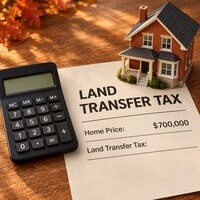
On a $700,000 home in Ottawa, Ontario land transfer tax is $10,475 before any first time buyer refund. The tax is charged in slices. It is 0.5 percent on the first $55,000, 1 percent up to $250,000, 1.5 percent up to $400,000, and 2 percent above that. There is no extra Ottawa tax on top. If you are a qualifying first time buyer, you can get up to $4,000 back, which brings the bill to $6,475. Your lawyer confirms the final amount at closing. Give me any price you are looking at, and I will give you the exact tax in seconds.

First time buyers in Ottawa can stack several programs, and together they are worth real money. The First Home Savings Account lets you save $40,000 tax smart. The Home Buyers Plan lets you use up to $60,000 from your RRSP. Ontario gives a land transfer tax refund of up to $4,000. New homes may also qualify for GST and HST relief. Rules change, so check for updates and confirm eligibility early. A couple buying together can often use the savings programs twice. Tell me if you have owned before and when you want to buy, and I will map out which programs you can actually use.

Yes. You can use the First Home Savings Account and the Home Buyers Plan together for the same Ottawa home. This is allowed and it is one of the best moves a first time buyer can make. The FHSA holds up to $40,000 per person. The Home Buyers Plan allows up to $60,000 per person from an RRSP. Together, that is up to $100,000 per person toward your purchase, if you have the savings and the room. Each program has its own forms and timing. Do not close one account too early. Ask me before you move money, and I will help you line up the steps in the right order.

A First Home Savings Account (FHSA) lets you contribute up to $40,000 toward your first home. Contributions are generally tax-deductible, and qualifying withdrawals are tax-free. Your $8,000 annual limit starts when you open the account, and you can carry forward up to $8,000 of unused capacity. You can generally keep it open for up to 15 years. If you don’t buy, you can usually transfer the savings directly to your RRSP without affecting your RRSP contribution limit. Tell me when you hope to buy in Ottawa, and I’ll help you estimate how much you could contribute by then.

Yes. The Home Buyers’ Plan lets a first-time buyer withdraw up to $60,000 from an RRSP to buy a qualifying home. The money must be in the RRSP for at least 90 days before you take it out. You repay it over 15 years, starting after a grace period set by the government. Check for updates, as repayment start dates were eased for recent withdrawals. If you miss a repayment, that amount is taxed as income that year. A couple can withdraw $60,000 each. Ask me how this fits with your FHSA, and I’ll help you use both without a tax surprise..

You qualify for Ontario’s land transfer tax refund of up to $4,000 only if you’ve never owned a home or held an ownership interest in one anywhere in the world. You must also be at least 18, be a Canadian citizen or permanent resident, and make the property your principal residence. A spouse’s previous homeownership can affect your claim. On a $700,000 Ottawa home, the full refund reduces your land transfer tax from $10,475 to $6,475. Your lawyer can file the claim at closing. Tell me about your homeownership history, and I’ll help you understand whether you may qualify.

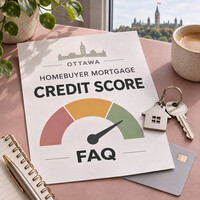
Most Ottawa buyers need a credit score of at least 600 to 650 to qualify for an insured mortgage, and 680 or higher opens better options. There is no single magic number. Lenders also look at missed payments, collections, and how much of your credit cards you use. A high score with heavy car and card payments can still fail. A fair score with low debts can still pass. The worst move is guessing and hoping. Check your score six months before you buy, pay cards below 30 percent of the limit, and do not open new credit. Ask me what to fix first, and I will be direct with you.

A pre-approval in Ottawa means a lender has checked your income, debts, and credit and has confirmed a price range in writing. A pre-qualification is just a quick estimate with no checks. Sellers and listing agents take pre-approval seriously. Pre-qualification does not carry the same weight. To get pre-approved, you share pay stubs, employment proof, down payment proof, and ID. The lender also applies the stress test. A pre-approval is not a final promise, because the home itself still needs approval. Get this done before your house hunting trip or first tour. Send me your timeline, and I will tell you what papers to get ready first.

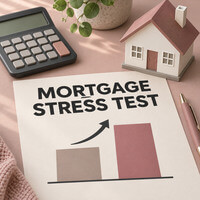
The stress test means you must qualify at the higher of your contract rate plus 2 percent or 5.25 percent, even if your real rate is lower. Check for updates, as the floor can change. This is why the home you can afford often feels smaller than the home you can pay for. On a $700,000 Ottawa purchase, the test can cut your buying power by tens of thousands compared with your contract rate alone. It applies to most federally regulated lenders. It is not optional and shopping around does not remove it. Give me your income and debts, and I will show you what the test does to your real budget.

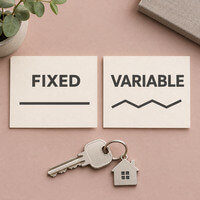
Choose fixed or variable in Ottawa based on your budget, your risk comfort, and how long you will stay, not on a rate guess. Fixed gives you a steady payment and peace of mind. Variable can cost less over time, but your payment or your payoff pace can change. No one can promise where rates go next, and I will not pretend I can. Check current rates for updates before you lock in. If a rate rise would stress your monthly budget, fixed is usually the safer call. Tell me your monthly comfort number, and I will help you weigh the two honestly.

Yes. Since December 2024, first time buyers can get a 30 year amortization on an insured mortgage, and so can any buyer of a new build. A longer amortization lowers your monthly payment. It also means you pay more interest over the life of the loan and build equity more slowly. On a $700,000 Ottawa home, stretching from 25 to 30 years can lower the payment by a few hundred dollars a month. That can be the difference between qualifying and not qualifying. It is a tool, not free money. Ask me to compare 25 and 30 years side by side for your price, so you see the full cost.

CMHC mortgage insurance is required in Ottawa when you put down less than 20 percent, and it protects the lender, not you. The premium is added to your mortgage. It is 4.00 percent with 5 percent down, 3.10 percent with 10 percent down, and 2.80 percent with 15 percent down. Check for updates before you buy. On a $700,000 home with $45,000 down, the premium is tens of thousands of dollars over the loan. The benefit is real too. It lets you buy sooner with a smaller down payment. Tell me your down payment, and I will show you your premium before you fall in love with a home.

Buying in Ottawa follows clear steps, and doing them in order saves you money and stress. First, get pre-approved and set your full budget, including closing costs. Second, sign a buyer representation agreement after you read the RECO guide. Third, tour homes and compare sold prices, not just asking prices. Fourth, make an offer with the right conditions and deposit. Fifth, complete your inspection and financing steps. Sixth, close with your lawyer and get your keys. Most buyers take two to three months to search, then 30 to 90 days to close. Tell me where you are in these steps, and I will tell you your exact next move.

Most Ottawa buyers take two to three months to search and 30 to 90 days to close after an offer is accepted. Your timeline depends on your pre-approval, how picky you are, and how much choice your budget gives you. A tight budget in a popular area like Kanata or Barrhaven can take longer. A flexible buyer can move in weeks. If you are relocating on a posting, we compress the search into days with strong prep before you arrive. Do not start with a hard deadline and no pre-approval. That is how buyers overpay. Share your move date, and I will build a timeline that works backwards from it.

Commercial FAQs

What cap rates are typical for commercial properties in Ottawa, and what is considered a good cap rate?

In Ottawa, value comes from income first: value equals net operating income divided by the cap rate. The ranges in the source used for this edition, KUL Real Estate, checked in November 2026, are multi-residential at 4.0 to 5.5 percent, industrial at 5.5 to 7.0 percent, retail at 5.5 to 7.5 percent, and office at 6.0 to 8.5 percent. Check for updates, because these ranges move with rates and with the building. A simple example helps. A property with $100,000 in clean net operating income at a 6 percent cap rate is worth about $1,666,667 on paper. The hard part is the word clean. Vacancy, bad debt, management, and repairs that are missing from the seller numbers change the answer fast. Send me the rent roll and the real expenses on a property you are looking at, and I will run the cap rate math with you, line by line.

Yes, Ottawa commercial can be a good investment, because demand here rests on the federal government, two universities, a hospital network, and the Kanata tech sector, not on one boom industry. That base makes Ottawa steadier than most Canadian markets, and steadier usually means slower, not risk free. Office is the soft spot right now. Retail and industrial have held up better, and multi-residential stays tight. The honest answer depends on the asset class, the submarket, and the leases inside the building. A plaza in Barrhaven and an office tower downtown are not the same investment at all. Tell me the property type and area you are considering, and I will tell you plainly where Ottawa is strong, where it is weak, and what I would avoid.

Commercial financing in Ottawa is based on the property income, not just your income, and most buyers put 25 to 35 percent down. Conventional lenders usually lend at 65 to 75 percent loan to value. They usually want a debt service coverage ratio of 1.20 to 1.35 times, which means the property income must cover the mortgage payment with room to spare. For multi-residential buildings with 5 or more units, CMHC programs, including MLI Select, can allow financing up to 85 percent loan to value in the sources used, with program rules that change, so check for updates. Your personal strength still matters, but the building has to carry itself first. Bring me a property you are serious about, and I will help you line up the numbers a lender will actually test.

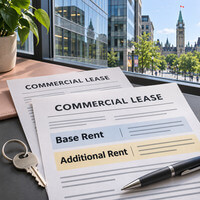
In a net lease in Ottawa, you pay base rent plus TMI, and TMI is taxes, maintenance, and insurance, so the headline rent is only part of your real cost. In a gross lease, one rent covers most costs, which is simpler but less common here. Ottawa office space in the sources used is quoted at about $19 per square foot net plus about $16 per square foot in additional rent, for about $35 per square foot in total. Industrial space is quoted at about $13.50 net plus about $5 in additional rent. Check for updates, and always ask for the current TMI figure in writing. HST at 13 percent also applies on commercial rent. Send me any Ottawa lease quote you have, and I will add it up into one true monthly number before you sign anything.

Before you buy commercial property in Ottawa, verify the income, the leases, and the property itself, in that order. Start with the rent roll, every lease, and at least two to three years of real financials. Confirm zoning and permitted use with the City of Ottawa. Review the building condition, roof, HVAC, parking, and any work orders or open permits. On environmental risk, a Phase 1 assessment reviews records, history, and the site without drilling. If Phase 1 flags a concern, a Phase 2 tests soil and groundwater. Lenders often require a Phase 1, and skipping it to save time can cost you the financing. This is general information, not legal advice, and your lawyer and environmental consultant confirm the scope. Ask me for a due diligence checklist for the type of property you are buying, and I will tailor it to that deal.


Ottawa office can work today only if you buy the vacancy risk at the right price, with the right tenant plan. CBRE reported Ottawa office vacancy at 15.0 percent in Q2 2026, and the federal government, the largest tenant in this city, has been giving space back. Check for updates. Downtown buildings face the hardest test. Suburban office near homes, parking, and daily services has often held tenants better. Some vacant downtown buildings suit office to residential conversion, but conversion is a City approval, servicing, and construction project, not a quick fix, and not every floor plan works. If you are looking at an office building, show me the lease expiry schedule and the vacancy inside it first. That tells us more than the asking price does.

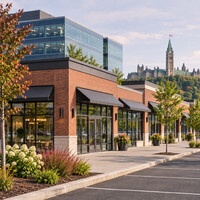
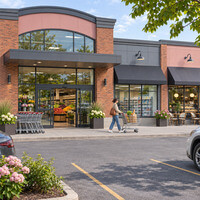
In Ottawa, grocery-anchored and daily-needs plazas usually offer the most durable retail returns, because people visit them every week in good times and bad. The sources used put grocery-anchored Ottawa plazas at about 4.8 to 5.3 percent cap rates, with unanchored strips higher, at about 6.0 to 7.0 percent. Check for updates. A lower cap rate here often means lower risk, not a worse deal. Look at the anchor lease term first. Then look at tenant mix: food, pharmacy, medical, fitness, and services hold traffic better than discretionary retail alone. Read every lease for expiry, options, and exclusivity clauses before you judge the income. Send me a plaza listing you are considering, and I will walk the tenant list with you and flag the leases that worry me.

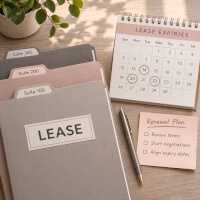
Your rollover risk is the share of your rent that expires in a short window, and it is one of the first numbers a buyer or lender will test. Build a simple expiry ladder: every lease, its end date, its rent, and its options. Weighted average lease term, or WALT, is the average time left across your leases, weighted by rent or by area. A cliff, where a large share of rent expires at once, hurts value and financing. Start renewal talks early, often 12 to 18 months before expiry for larger tenants, and price the renewal against real market rent, not hope. If you plan to sell, renewed leases at market rent are often the best money you can spend before listing. Share your expiry dates with me, and I will help you map the cliff and the order to tackle it in.

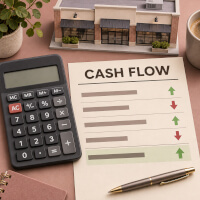
Yes, always stress-test a commercial deal before you buy it, because the base case is rarely the case you get. Build the monthly and yearly cash flow first: rent in, vacancy allowance, taxes, insurance, maintenance, management, and debt payment out. Then run three honest tests. Rent down 10 percent. Repairs up 50 percent. Interest rate up 1 percent. Add a vacancy increase if the building has one dominant tenant. If the deal still covers its costs under stress, you have a margin of safety. If it only works when everything goes right, it does not work. This is also the one question in this list with a source that specifically names Muse as a tool people used for it. Bring me a deal you are testing, and I will run the stress cases with you and show you where it breaks.

Hire the Ottawa commercial realtor who can show you recent commercial deals like yours, in your submarket, with the numbers to prove it. Commercial is its own practice. Ask any agent you interview three things. What have you sold or leased in this asset class in the last two years? How will you reach buyers or tenants beyond a listing post? And how will you price it, using income and cap rate, not just price per square foot? I am Fady Khudair, a Sales Representative with Sutton Group Ottawa Realty, Brokerage, and Founder of Khudair Real Estate Group. Commercial work is half of my practice focus, across sales and leasing in Ottawa. If you are choosing representation for a building, a plaza, or a lease, ask me those same three questions first. I would rather earn it on answers than on a pitch.

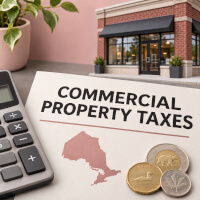
On a commercial deal in Ontario, plan for 13 percent HST, Ontario land transfer tax on a purchase, and capital gains tax on a profitable sale. HST applies on most commercial sale prices and on commercial rent, including TMI. If you are an HST registrant using the property in commercial activity, you generally self-assess the HST on a purchase and claim offsetting input tax credits, so it is often a reporting flow, not a final cost. If you are not registered, it is real cash, so confirm your status before closing. Ontario land transfer tax on commercial property follows the provincial tiers, and there is no first-time buyer rebate for commercial. Ottawa has no added municipal land transfer tax. On a sale, capital gains tax applies under federal rules that can change, so check for updates. This is general information, not tax advice. Your accountant and lawyer confirm your numbers. Ask me early in a deal, and I will flag the tax questions to take to them before you are firm.

Contact Khudair Real Estate Group

Still have questions? Contact one of our REALTORS®. We’re happy to help with your residential or commercial real estate questions in the Ottawa area.


For inquiries contact:

Fady Khudair
R E A L T O R ®️
fady@khudair.ca

Hanan Awneh
R E A L T O R ®️
hanan@khudair.ca

Asheley Tournache
R E A L T O R ®️
ashley@khudair.ca

Office:
400-300 Richmond Rd, Ottawa, Ontario K1Z 6X6

613-793-3239